Sight reading
Explaing the stave (a concise guide)
The notes on the treble clef (𝄞)

See the circle of fifths for more about keys and how to recognise them.
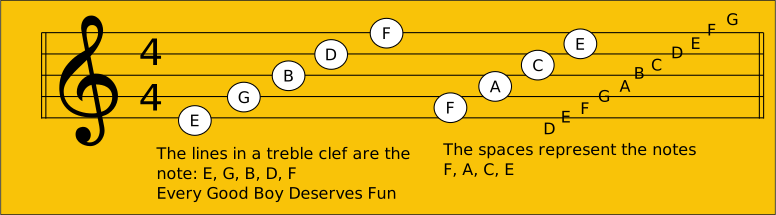
Each line and space represents a different note, the bottom line is an E, then the space above it is an F, as you climb higher up the stave, each note increases.
Under standing rhythms (very basic)
How to count the rhythms (assuming four beats in a bar)
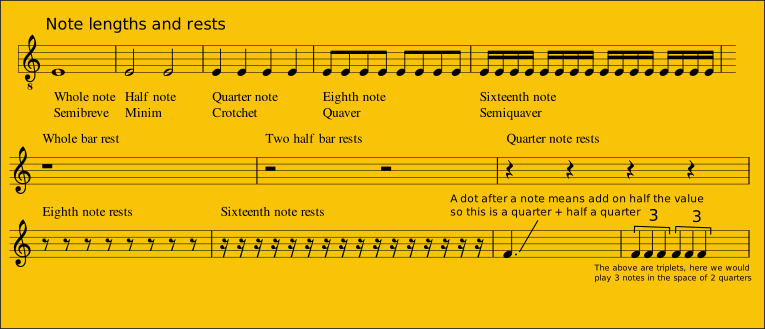
- Whole note (𝅝): count 1, 2, 3, 4 for the entire note
- Half note (𝅗𝅥): count 1, 2 for the note
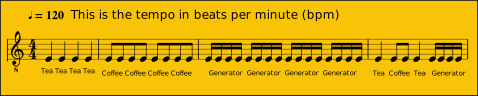
- Quarter note (𝅘𝅥) count 1 (or tea) for the note (1, 2, 3, 4)
- Eighth note (𝅘𝅥𝅮) you have to divide beat in to, so count 1 & (or coffee) for two eighth notes (1 &, 2 &, 3 &, 4 &)
- Sixteenth note (𝅘𝅥𝅯) again we have to divide the beat, so count 1 e & a (or generator), for four sixteenth notes (1 e & a, 2 e & a, 3 e & a, 4 e & a)
- Here is the final bar in the example, quarter, eighth, eighth, quarter, sixteenth, sixteenth, sixteenth, sixteenth (1, 2 &, 3, 4 e & a or tea, coffee, tea, generator)
You may find it easier to use regular language to count beats, for example I think of a quater note as ‘Tea’ (as it has one syllable), so for a bar of quarter notes I'd count tea, tea, tea, tea. For eighth notes I use ‘Coffee’ (as it has two syllables), so I'd count coffee, coffee, coffee, coffee for a bar of eighth notes. For sixteenth notes I use the word ‘Generator’. I will do a few examples here: